 Reviews



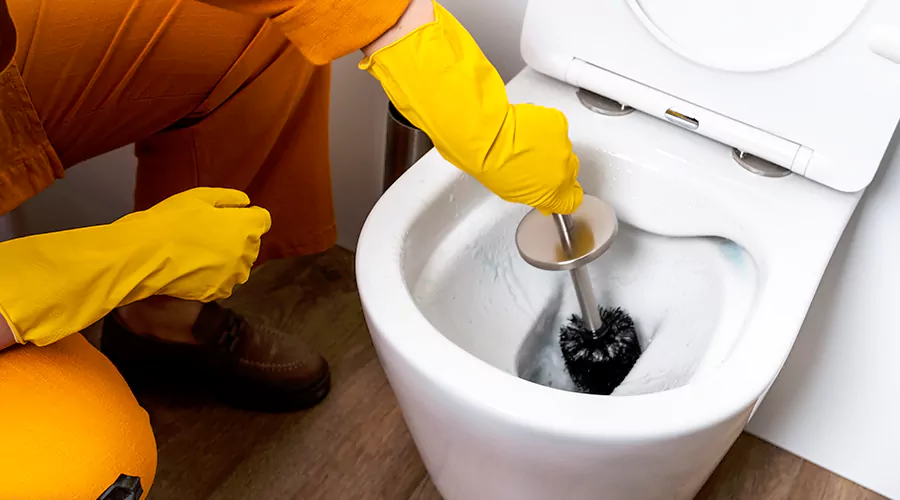
A fully blocked toilet should not be flushed again because the next tank of water can overflow the bowl, while a 2026 clogged-toilet repair can cost about $85 to $600. Start by stopping water flow and then determine whether the blockage is soft material or a solid object.
A blocked toilet fix requires more caution than dealing with a bowl that is merely slow. When water cannot pass through the trap, every new flush adds volume to a bowl with nowhere to send it.
Work from the least aggressive method upward. The goal is to reopen the waste path without damaging the porcelain or pushing an object deeper.
What Should You Do First With a Completely Blocked Toilet?
Stop flushing as soon as the bowl fails to drain. If water is still entering, close the toilet shutoff valve or keep the tank flapper closed. Let the bowl level fall before using a plunger or adding any more water.
- Wear rubber gloves.
- Protect the floor around the toilet.
- If the bowl is almost full, remove some water into a bucket.
- Look for anything visible near the outlet.
A reachable foreign object should be removed rather than pushed farther through the trap. Do not test the toilet with another full flush while the bowl remains high. This first stage is about controlling water rather than clearing the clog.
Why Does a Toilet Become Completely Blocked?
A complete blockage forms when the trapway or connected drain no longer has enough open space for water to pass. Excess paper can form the obstruction. Wipes or solid bathroom items can also catch inside the curved passage and collect more material around them.
A blocked toilet differs from a weak flush because water has difficulty leaving the bowl even when enough water is supplied.
- Common causes include excess toilet paper.
- Non-flushable wipes are another cause.
- Foreign objects can lodge inside the trap.
- A pre-existing partial restriction can gradually close.
- A deeper drain blockage can also appear first at the toilet.
Understanding the cause changes how aggressively you should work on the obstruction.
How Does a Blocked Toilet Progress?
A total blockage usually develops through stages unless a solid object creates the obstruction instantly. Water may first slow down before the toilet stops draining. Each additional flush can compact material more tightly or push wastewater over the rim.
| Stage | What You Notice | Main Risk | 2026 Cost Exposure |
|---|---|---|---|
| Slow | Bowl drains with delay | Restriction grows | Often DIY |
| Partial | Water rises then drops | Overflow risk | Low tool cost |
| Blocked | Water barely moves | Immediate overflow risk | $85 to $600 |
| Deep blockage | Other fixtures react | Sewer backup | Potentially higher |
Current cost data puts clogged toilet repair at about $85 to $600 in 2026. A main sewer blockage averages about $380 and can rise with more involved work.
Repeated flushing makes none of these stages safer.
What Signs Tell You the Blockage Is More Serious?
The strongest warning signs involve water that does not move or drainage changes outside the toilet. A simple paper clog is normally isolated. When another fixture reacts, the blockage may be located after the toilet joins the building's drainage system.
- The bowl remains nearly full. Very little water is passing the obstruction.
- No drainage occurs after several minutes. The usable opening may be completely closed.
- The blockage followed a flushed object. Mechanical retrieval may be required.
- The toilet blocks again immediately after plunging. The obstruction remains.
- A blocked toilet drain affects another bathroom. Shared piping may be involved.
- Water rises in the shower. Wastewater is finding another exit.
- Another toilet gurgles. Air is moving through connected piping.
- The toilet backs up without being used. The source may be farther downstream.
- An auger meets a hard stop repeatedly. A rigid object may be lodged in the trap.
- Several drains slow at once. The blockage likely extends beyond one fixture.
A full blockage with multi-fixture symptoms should not be treated like an ordinary soft paper clog.
What Is the Best Way to Unblock a Toilet With a Plunger?
The best way to unblock a toilet with ordinary paper or waste is to use a flange plunger that seals against the bowl outlet. Water inside the plunger cup transmits force better than trapped air and helps move the obstruction through controlled pressure changes.
- Place the flange over the outlet.
- Tilt it slightly so the cup fills with water.
- Push gently at first.
- Maintain the seal.
- Then use controlled strokes.
- Finish with a firm pulling movement.
This Old House notes that pulling can help break material apart rather than compressing it into the narrowing trapway. Wait afterward. A sudden drop in bowl level is a positive sign but it is not the final test. Add a modest amount of water before using the tank flush.
How Can You Unblock a Toilet Without a Plunger?
Hot water and dish soap can help with a soft paper blockage when no plunger is available. The water must stay below boiling because very hot water can crack toilet porcelain. This method should not be used to force a visible solid object farther into the fixture.
- Let the water level fall first.
- Add liquid dish soap.
- Pour hot tap water carefully.
- Wait about 15 minutes.
- Watch for the level to begin dropping.
This approach can lubricate a soft obstruction. It will not dissolve a toy or another rigid object.
Avoid boiling water. Do not mix chemical products. Never add chemicals when another drain product is already present in the bowl.
When Should You Use a Toilet Auger?
A toilet auger is appropriate when a flange plunger cannot move the blockage and you suspect material is trapped farther through the toilet's curved passage. Its protective tube is designed to reduce scratching while the cable travels through the trapway.
- Place the curved end into the toilet outlet.
- Advance the cable slowly.
- Rotate the handle as resistance develops.
- Do not force a hard obstruction.
- Retract the cable to see whether it caught material.
A standard exposed drain snake can scratch porcelain. A closet auger is designed specifically for the geometry of a toilet.
If the cable passes its normal reach without changing the blockage, the restriction may be beyond the fixture.
How Can You Test Whether the Blockage Is Gone?
Do not make the first test a full tank flush. A controlled water test limits the amount available to overflow if the obstruction remains. Only test after the bowl has returned to a safe level.
- Add a moderate amount of water directly to the bowl.
- Watch how quickly it leaves.
- Normal water should move through the trap without rising close to the rim.
- If water rises again, the obstruction is still present.
- If it empties quickly, repeat with another controlled amount before restoring normal use.
The principle is simple. Verify drainage before allowing the tank to release its full volume.
When Should You Call a Professional?
Professional help makes sense when the toilet remains fully blocked after correct plunging and an auger attempt. It is also warranted when the blockage affects other fixtures because the restriction may be located in a branch drain or main sewer line.
In 2026, clogged toilet repair ranges around $85 to $600. Main sewer clog work averages roughly $380. More complex cases can reach about $1,600 when inspection or stronger clearing methods are needed.
Stop DIY attempts when:
- Wastewater enters another fixture.
- Several drains stop at once.
- A solid object cannot be retrieved.
- The auger repeatedly hits a hard obstruction.
- The toilet blocks again immediately.
- Sewage rises without the toilet being flushed.
A professional can inspect beyond the length of a household toilet auger and determine whether the obstruction belongs to the fixture or the drainage system.
How Can You Prevent a Blocked Toilet?
Most preventable toilet blockages come down to what gets flushed. Wastewater authorities recommend putting only human waste and toilet paper into the toilet. Wipes belong in the trash even when the package describes them as flushable.
- Keep a wastebasket near the fixture.
- Avoid sending large amounts of paper in one flush.
- Keep small bathroom objects away from open toilet lids.
- Respond when the bowl begins draining more slowly.
- Check flush strength when paper starts remaining behind.
Do not treat plunging as routine maintenance. Frequent blockage means there is a reason worth finding.
These habits cost almost nothing compared with the repair range for a severe obstruction.
Conclusion
Knowing how to fix a blocked toilet starts with one rule. Do not keep flushing a bowl that cannot drain. Control the water first and then use a flange plunger. Move to a toilet auger for a deeper obstruction. When other fixtures begin backing up, the problem may extend beyond the toilet. This week, place a proper toilet plunger where it can be reached before an emergency happens.
Frequently Asked Questions
These final questions address special blocked-toilet situations that can affect which method is appropriate. They focus on conditions not covered by the main clearing sequence.
Can a toilet be blocked even when the water slowly disappears?
Yes. A narrow opening can allow water through while still stopping normal amounts of waste and paper.
Will leaving a blocked toilet overnight help?
A paper-based obstruction can soften with time. A solid object will remain in place.
Can I unblock toilet drains with boiling water?
No. Use hot water rather than boiling water because excessive heat can damage porcelain.
Why does my toilet block after every large flush?
A partial restriction or weak flushing action may leave enough material behind to trigger the next blockage.
Is an unblock toilet chemical better than an auger?
Mechanical clearing is usually more predictable for a physical obstruction. If a chemical product is used, its label must specifically allow toilet use and it should never be mixed with another cleaner.